4 Day Trek in Nepal's Lower Mustang District
Join me as I spend 4 days trekking in Nepals Lower Mustang District.
HUT TO HUT
MikeHikesTheAlps
4/11/201742 min read
Intro:
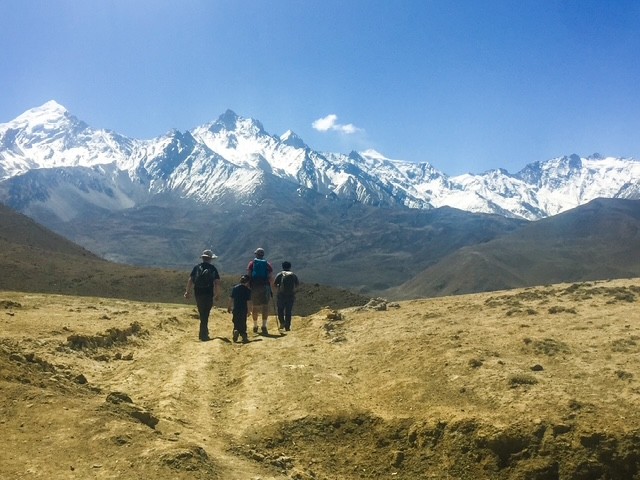
I learned quickly that in Nepal it’s best to expect the unexpected. Spending a few days in Katmandu was more memorable than some multi week vacations I had been on. The driving itself was something I won’t soon forget. It’s impossible to articulate the sheer chaos of travelling by car in Katmandu. If you can survive it, nothing will ever match it. Yes, memorable was the word. The truth is, I loved Katmandu. It was stimulus overload. Seeing something for the first time was an hourly occurrence. Cows lying down in the middle of a busy street while cars sped by in both directions. Don’t worry, they were fine. Hurting a cow in Nepal is in some ways worse than hurting another person. At least that’s what the locals told me. I saw more 3 legged dogs in 1 day than I knew existed on earth. Cars and vans filled with a dozen people, some inside the car/van, some hanging on the outside. Motor bikes with families on them. Yes, I saw a family of four driving on a motorbike. Husband, wife, young child and baby. I saw vehicles that looked like they were props for a Mad Max movie. It was all so unique. And don’t forget about the temples, the monkeys (don’t make eye contact), the dust, the food (momos), the people, the Thamel (Market), and the airports. Ok, I wouldn’t mind forgetting the airport. That was not such a great memory. The city of Katmandu has a special place in my memories, but the real heart of Nepal is in the Himalayas. There are 14 mountains in the world that over 8,000 meters (26,246 feet) and Nepal is home to 8 of them. No, I’m not hiking one of those mountains, but I was about to embark on a 4-day trek into the Lower Mustang area of Nepal. Me and a couple of friends would set off into the Himalayas where I would experience the most majestic mountain range in the world. Here is my story.
Day 1: Jomson to Kagbeni
After spending the night in Pokhara, our guide picked us up at our hotel and drove us the Pokhara airport. There we waited. And waited. And waited some more. Finally, we boarded a small plane and prepared for our 30 minute flight to Jomson. It was....cozy.
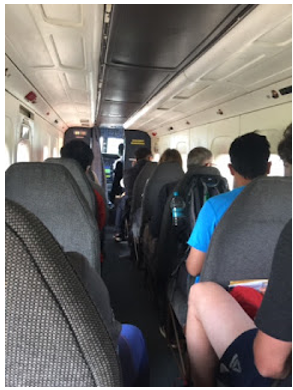
Flying into Jomson is not for the faint of heart. If flying over the worlds largest gorge isn't enough to get your heart pumping, then landing on a postage stamp of a runway while flying dangerously close to a mountainside will. Oh, did I mention the turbulence? The turbulence was bad enough to make me look around to see how others were processing it. No one freaked out, so I guess it was normal? Either way, we landed. Jomson looked like a ghost town from the old west. Dusty, dirty, depressing.
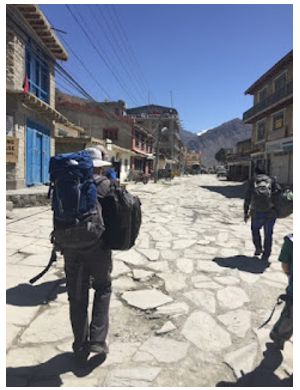
A jeep track cuts through the town. Lining the streets is a combination of supply stores, cafe's and tourist information centers. We started our trek to Kagbeni here. After 10 minutes of hiking through the town, we passed a military installation that posted signs saying "no pictures allowed." Not exactly the most welcoming or scenic start to a trek in the Himalayas. We exited the town and followed a road that ran along the Kali Gandaki River. The river was dry. Literally. Cars and vans were actually driving on it. People were walking on it. Here and there you would see a trickle of water or a little stream inside its wide expanse. We shared the dusty road with many vehicles. Buses, motorbikes, cars. Each time they passed swaths of dust and dirt were thrown into the air creating an unpleasant cloud of dust. This is a good time to mention that a face mask is a must here. I used a "buff" and it worked great. If you don't have one, you will inhale lots of dirt and dust.
Onward we trekked. In Nepal there are two types of trails. Jeep track and single track. This was a jeep track and it was well travelled by vehicles. The temperature was mild, however, because of the lack of clouds a 50 degree day felt like a 75 degree day. Sunscreen is a necessity. There is not much shade. We trekked for about 3-4 hours before hitting Kagbeni. It is here that I started to feel really optimistic about this trek and this trip. Sitting at 2800 meters (9186 FT), Kagbeni can only be described as charming. It was a unique little village right on the river. The buildings varied in shape and size. The path through the village twisted and turned through narrow alleyways and over small makeshift bridges. It was a little maze of streets and paths all inter-twined in a way that just made sense.
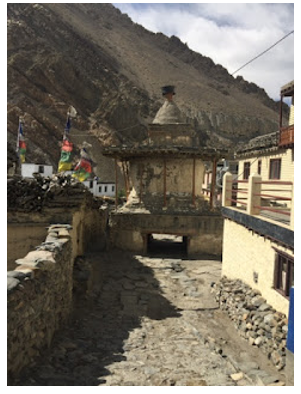
People live here. This was their life and you could tell. It felt authentic. It was a simple life. Poor. As far as I could tell, tourism, farming and cattle were the only industries here. Stacks of wood lined the rooftops. In most countries people kept money in banks. Here, people's savings accounts were literally stacked on their roof in the form of wood. That is their currency. That is their nest egg. It was both sad and admirable at the same time. We saw cattle everywhere. Roosters hanging out with goats. Sheep hanging out with cows. I was finally here. I was finally in the Himalayas. Our guide set us up at the Red House Lodge.
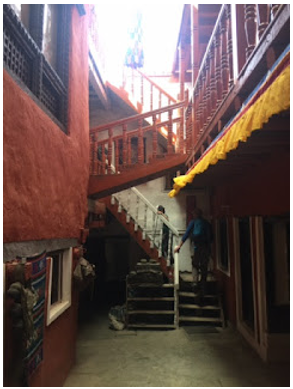
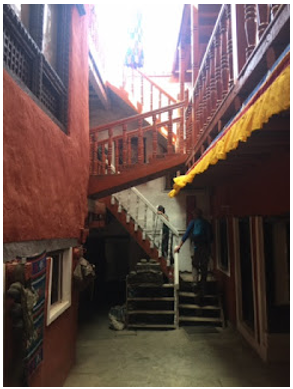
It was my favorite accommodation on the trek. The building was nestled on a hill, which gave it a lot of character. If you are lucky, you may even get the "solarium" room. My friend stayed in it and it was a completely isolated glassed in room on the roof of the building. As guests, we were greeted by the lodges staff with a traditional fruit juice. I wish I remember what it was called. It tasted like a cross between papaya juice and Gatorade. We came across it at a few other tea houses on the trek. Sometimes it is served warm and sometimes cold. The rooms were nice. I had my own private bathroom and shower.
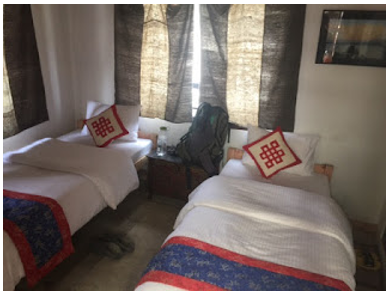
The shower was located the wall right next to the toilet and sink with nothing separating them. It conserves space and is the typical set up for tea houses and lodges in the region. As you get to higher altitudes the amenities become less and less available. Having a hot shower in Kagbeni was a treat, one we would not have until the last day of our trek. Because we arrived in Kagbeni around 1PM, two of us decided to go out on a side trek and check out the area. On a map we saw a place titled the "ruined village" so we asked our guide for directions and we were off.
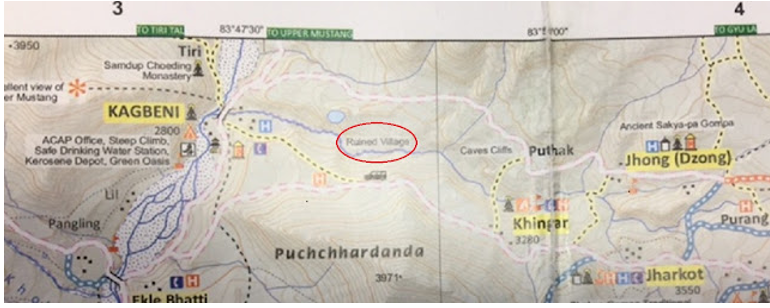
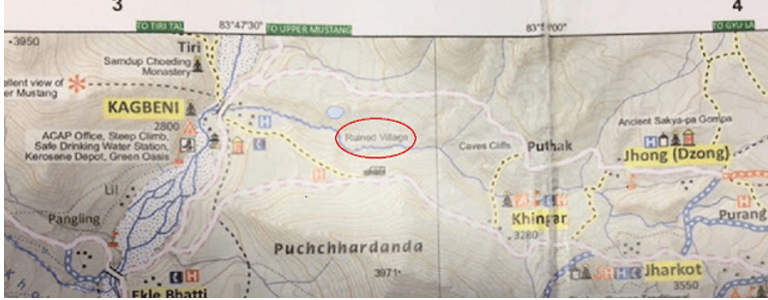
We soon referred to it only as the "lost city." We did not find the lost city. Instead, we got lost. We ended up following the river up and up through the valley. On both sides of the river were giant hills, cliffs, rock encampments and caves. What lived in those caves? I didn't want to know. We didn't exactly have an escape route if a mountain lion paid us visit. We kept following the dry river bed around each turn only to see more river and more winding turns through this giant ravine. Each turn we expected to see something, anything, (a lost city perhaps) but all we saw was more of the same. This place was so vast and so grand. It made me feel so insignificant. We climbed one of the steep banks to get our bearings, but all we saw was more vast landscape of nothingness. We turned back. Later we would find out we went the entire wrong direction. Oh well.
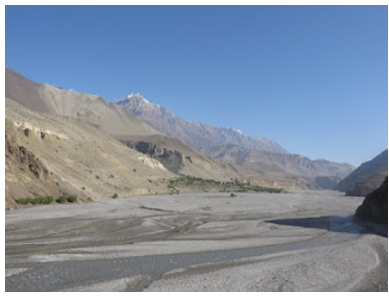
Back at the lodge, we began to discuss the possibility of altering our itinerary. Our current plan for the next day was to trek on the same busy jeep track to our next destination, Jarkhot. We wanted to avoid the busy road, so we asked our guide if he had any other suggestions. He suggested an alternate route on an unused jeep track. The route would add 3 hours to the trek, but we would be free of vehicles and be a bit more isolated. Easy decision. We all agreed and that was that. We walked around Kagbeni and decided to get a drink before dinner. At a café we met an American girl from California. Her name was Mary. She had been in Nepal for 6 months. She was on a solo trek. She was in her early twenties. Although we weren't exactly interested in her story, we got it. She had essentially decided to rebel against traditional life. College, family and jobs could all wait. She had spent 6 months in a small town an hour outside of Kathmandu. She stayed there and learned the art of wood carving. I asked for a demonstration, but I didn't get one. Here, at this café, we tried our first traditional Nepali drink; Raksi.
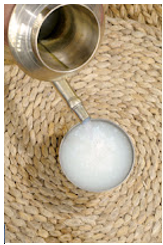
In 2011 CNN highlighted the worlds 50 most delicious drinks: Raksi was rated #41 (right behind coconut water). I strongly disagree with that rank. It tasted like paint thinner. Actually, paint thinner is better.. probably. We paid $1 US dollar for it and Amy told us we got ripped off. I guess it should have been 25 cents. Oh well. We said our goodbyes and went to dinner. I thought the food was good. It was a pasta and red sauce dish. This was different from the typical food we had been eating in Nepal and it was a welcome change. It was just what we needed to refuel for the next day.
This is a good time to talk about beer. We tried a few different types on our trip, but our overwhelming favorite was Gorkha beer. A distant 2nd was Everest Premium Lager. After while we would only order Gorkha beer. Why was it my favorite? Was it because the beer was named after the famous military warriors? Probably. You can read about them here. Did their history and reputation for being brave in battle add to the taste? Yes, it did. But seriously, the beer was pretty good.
Day 2: Kagbeni to Jarkhot
Before we get into day 2, I think its important to note that if we could do it over again, we would have taken a jeep ride from Jomson to Kagbeni. The day 1 hike was easily the worst of the trip. It was just a means to get to Kagbeni and didn't really offer much in the way of scenery or excitement. The road was just too busy and too dusty. On the morning of Day 2 we ate a quick breakfast and then congregated on the porch eagerly awaiting our trek. While perched up on the porch we witnessed a goat herder leading what seemed like hundreds of goats through town.
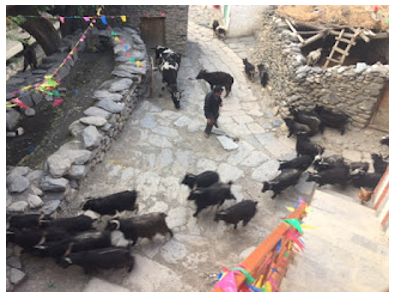
The scene lasted about 10 minutes and for me was an eye-opening experience. I have never seen anything like it. It was a great way to start the day and a great beginning to what would be an incredible day 2 of our trek. We headed out around 8:30AM. The sun was shining bright illuminating the town and the river. We would gain a decent amount of altitude on day 2 and we started trekking uphill early and often. About 20 minutes into the hike I looked back at Kagbeni in awe.
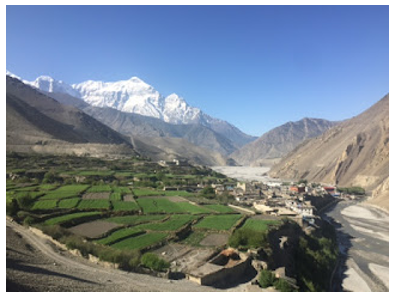
There it was, nestled on the river with snow covered Nilgiri in the background (above pic) looming over everything. It was the type of scenery I had hoped I would see prior to coming to Nepal and it definitely lived up to expectations. Nilgiri means "blue mountain" and it dominated the horizon. Sitting at 7061 meters (23,166 FT) it doesn't even break the top 50 highest mountains in the world, but to this point it’s the highest mountain I've ever seen. It dwarfs Mount McKinley (6144 meters), the highest mountain in North America. In terms of elevation, there's nothing close in the Rocky Mountains or the Tetons. There's nothing in the Sierra Nevada's and there's definitely nothing like it in New England's (I am from Massachusetts) White or Green Mountains. We continued to trek up and up. Every time I glanced back from where we came, Kagbeni would appear to get smaller and smaller, but Nilgiri's presence was as prominent as ever. We would spend the next 5-6 hours hiking over ridges and around plateaus and down into valleys.
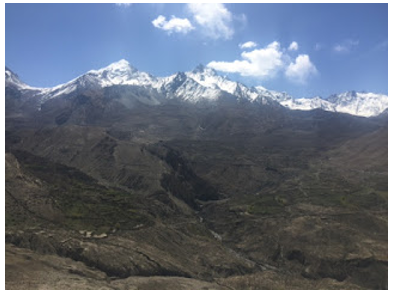
We stopped for lunch in a small village. I had vegetable fried rice. We re-stocked our water supply and continued our trek up and up on route to Jarkhot. I met an Italian couple coming down from the Thorong La Pass. I was instantly jealous. I had read about the pass prior to our trip. At an elevation of 5416 meters (17,769 FT), it is the highest mountain pass IN THE WORLD and it was a highlight of the most popular trek in the area; the Annapurna Circuit Trek. The trek takes about 16 days. Check it out here. The Italian couple had run out of water. I asked about the pass. They said it was grueling. Snow had fallen at the higher altitudes in recent days and it made the trek down slow and menacing. I was even more jealous after hearing that. Is there something wrong with me? Maybe. After giving them some water, I stood there and stared up at the pass, mouth watering. Yes, there's something wrong with me.
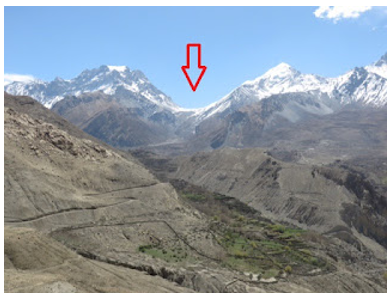
But seriously, who wouldn't want to trek up to and over the highest mountain pass (above pic) in the world? I spent the remainder of the day trying to figure out how to get up there either this day or the next. My head was spinning. It didn't look that far away. Maybe it was possible? I asked our guide about it and 30 seconds into our conversation my dream was crushed. The problem is acclimating to the elevation. To safely trek to that altitude, we would have to stay overnight in Jarkhot. Trek halfway up the Pass the next day and then back down to Jarkhot for another overnight. Altitude sickness in this region is a real concern and nothing to dismiss lightly. I certainly wasn't going to mess around with it. Unfortunately, my friend would get a dose of it this very night while in Jarkhot. The village sits at an altitude of 3512 meters (11,522 FT). His symptoms were a headache, loss of appetite and vomiting. He ended up taking some Advil and going to bed. He woke up on day 3 as good as new.
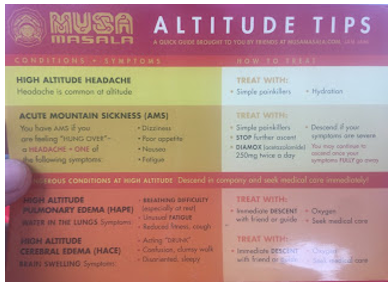
I guess making it up to the Pass was not meant to be. We didn't have time and it wasn't the sort of place you trek up to, just to come back down. Over the next few days, we would meet a lot of people on the Annapurna Circuit Trek. Each person I spoke with talked about the Pass, the experience and the challenge. Maybe someday I will get back to Nepal and conquer the Thorong La Pass. I hope so.
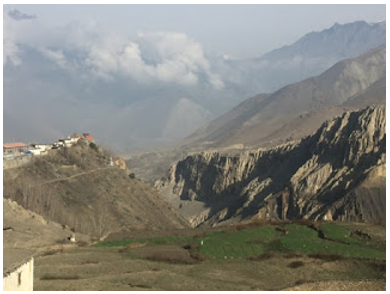
We made it to Jarkhot (above). Sitting on top of a plateau overlooking the great expanse of the Lower Mustang, Jarkhot can only be described as meek, poor and humble. There is a feeling of solitude here. I felt a strange sort of comfort in the deafening quiet that existed here. The lack of oxygen in the air only brought more focus to my breathing. I felt in balance. I felt like my senses were attuned to the surroundings. It brought me peace. I felt alive.
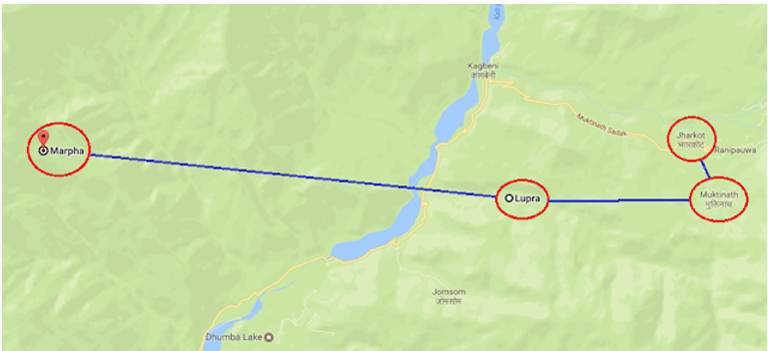
The accommodations were modest. It was definitely the simplest accommodation we would encounter on our trek. After getting situated at the tea house, I sat in the common area and drank tea. Tea is free at the tea houses. It was time to do more tweaking of our itinerary. The original plan was to hike to Muktinath Temple and than back down to Jarkhot for another night. That wasn't going to work. We needed something new. We needed to keep going. Our guide was incredibly accommodating and gracious with our request. In fact, I got the sense that he was on the same page as we were and actually preferred to switch the itinerary. He offered a suggestion. We would trek to Mutkinath Temple then on to Lupra Valley for Lunch. There we would catch a jeep to Marpha. We had heard great things about Marpha, so I was very excited to add it to our itinerary.
Before dinner I decided to be daring. There was a sign that said hot shower 1000 rupees ($1). It had been a long, tiring day. A shower could be good, right? I paid the $1. I was given some strange instructions on how to use the shower and sent on my way. My first observation was that the shower looked old. Really old. The pipes were dented and rusted. It looked like something you would see on the side of the road waiting to be picked up on trash day. The shower head was essentially a metal cylinder with a hole in it. It looked like it couldn't possibly work. Well... It didn't. Like most showers there were two faucets, but when I turned these faucets nothing happened. Well, that's not exactly true. A trickle of freezing cold water came out. When I say trickle, I mean a teeny tiny little bit of water came out. It wasn't enough water to wash my hands, let alone take a shower. When I was given my instructions, I was told to turn the red lever on the electrical box located high on the wall in the corner. The hot water! I turned it on. The result was not as expected. The cold trickle of water was replaced with a scalding hot trickle of water. I tried every combination of faucet turning, level adjusting and praying, but it was clear that I was left with two choices. Freezing cold or boiling hot. Both were unbearable. I went with the hot. Again, it’s important to clarify here that this was not a "shower." The water didn't stream or spray out of the shower head. It trickled out. I was confused. I looked around and saw a bucket. Hmmm. I placed the bucket under the faucet and let the boiling hot water fill it. I rationalized that what ever disgusting germs existed in this bucket would be instantly killed by the scalding hot water filling it. At the time I thought it was decent science. Since there was no way to change the temperature of the water and since it was way too hot to touch I devised a plan. Step 1: fill the bucket up half way with hot water. Step 2: wait 5 minutes for the water to cool to a reasonable temperature. Step 3: splash myself with the water and wash. I repeated these steps 4 or 5 times. That was my shower. It certainly was memorable.
After the shower incident, we ate dinner. I had vegetable lo mein....again. A typical lunch or dinner would be either veggie fried rice or veggie lo mein. Sometimes you could get soup, but not always. These places had menus with a lot of items on them. It is sort of frowned upon to order food off the menu that is not cooked in mass quantities. First of all, it would take forever. Secondly, it takes a lot of energy and resources to cook something different. So, you are essentially left with a choice between noodles and rice. So tonight, I had noodles. Was it good? No, not really, but after a long exhausting day of trekking I really didn't care what it tasted like. I ate it all then went to bed. The bed was slightly softer than cement. It didn't matter. I was out cold and didn't wake up till morning.
Day 3: Jarkhot to Mutkinath Temple to Lupra to Marpha
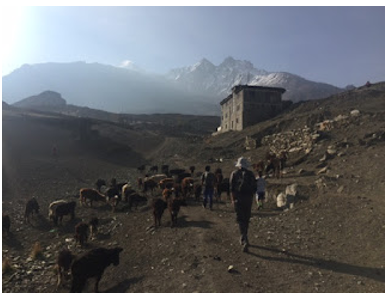
We had an early breakfast and we were off. I was well rested and ready for the toughest trekking day of the trip. It was another beautiful morning, not a cloud in the sky. We left Jarkhot and started our journey to Mutkinath Temple. Heading out of the village we walked amongst the cattle out for an early morning graze. Fresh air, high altitude, animals grazing, beautiful mountain scenery in every direction. There' s no better way to start the morning. The adrenaline kicked in and up up up we climbed. It is roughly a 2 hour hike to the temple. On the way to the temple we passed through the village of Ranipauwa. While walking through the village we spotted a large Buddha statue set high up on the hillside. My buddy and I left the group to explore. We had to weave in and around a few houses to get up on the ridge, but we got there.
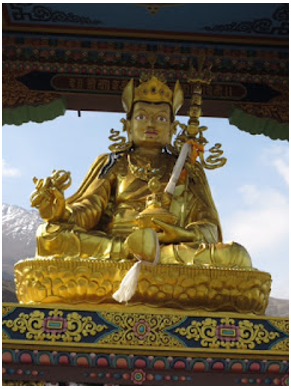
The statue was absolutely enormous and in overlooked the valley. I had never seen anything like this before. It was just one of many "firsts" on this trip. It blew my mind. We sat up on the ridge for a while taking the scene in. This is why I came here. Time seemed to stretched out here allowing me to take in the whole experience. Minutes passed, maybe hours. I don't know. I don't care. Time didn't matter. Schedules didn't matter. This very moment was everything. Moments like this are why I travel. Moments like this make me feel alive. I sat there in a daze till my friend jostled me back to reality. It was time to go. We left this magical place with the hope of finding more magical places. That is what this trip was all about.
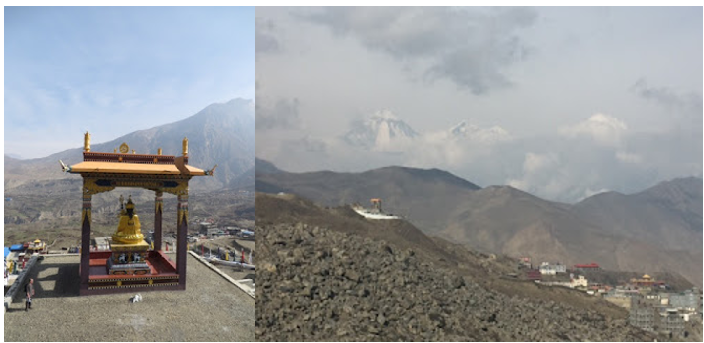
Instead of descending back to the main road through Ranipauwa, we followed the high ridge to the Mutkinath Temple. It was the very definition of a pleasant walk. We had the path to ourselves. The view looking back on the Buddha statue high up on the hill overlooking the village of Ranipauwa (above right pic) was nothing less than spectacular. The day just kept getting better.
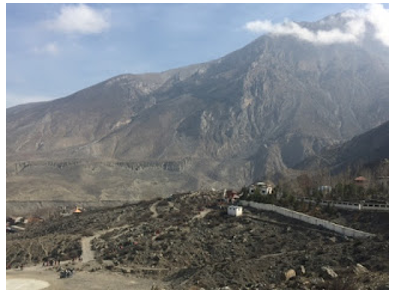
It took us about 15 minutes to reach the back gate of the Mutkinath Temple Village. Immediately upon entering the walled village, you could feel the excitement in the air. This place was vibrant. We saw many monks walking around. We saw what I think were Baba's sitting on the ground, legs crossed, in silent meditation. There were bells everywhere along the walkways. People would ring them as they passed. This was a very religious place. It was a sacred place for both Buddhists and Hindu's. Many religious Hindus and Buddhists make a pilgrimage to this Temple. It is believed that the temple is one of the only places on earth where you can find all 5 elements in one place: fire, water, sky, earth and air. We arrived at the Temple. The energy intensified.
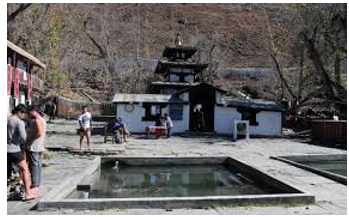
Behind the temple there were two small pools. Here, men and women would strip to their underclothes and bath in the sacred waters. It is believed that bathing in these pools washes away negative karma.
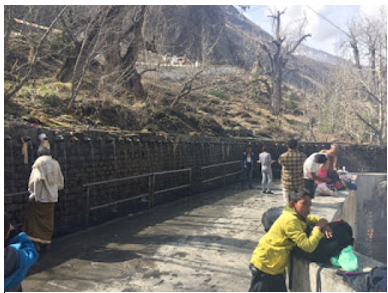
The outside perimeter of the temples walls were lined with 108 bull faced stone faucets (above pic), all of which are 7 FT high. From the faucets flowed the sacred waters which comes straight from the mountains and the Kali Gandaki River. The water is ice cold and it is believed that bathing under each of these 108 faucets brings salvation. The number 108 carries great significance in eastern philosophy. This is how the water element is represented. After bathing under the faucets, the next step is fire.
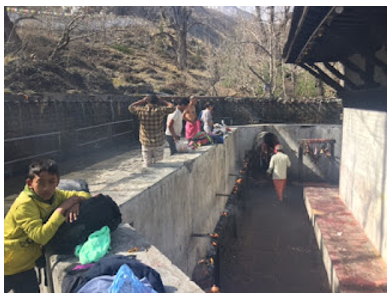
On the inner wall is a circle of Fire (above pic). There is a gas flame that is continuously lit. Here, religious pilgrims worship the god of fire. Finally, there is the temple itself. We didn't go inside the temple. It was quite busy while we were there. Although we didn't stay in this village for a long time, the experience was rich and memorable. At 3710 meters (12,172 FT) just getting to this temple was a journey. This place was special. Our guide expressed the importance of this place to him and his family which only added authentication to the experience. I'm glad we came.
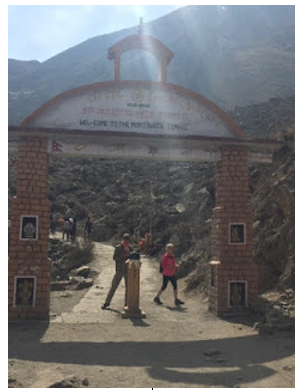
We left the temple and started on our trek to Lupra Valley. We passed through Ranipauwa again on the way back. The street was lined with little shops and table vendors selling jewelry. I decided to try my luck with some negotiating. I thought I was a decent negotiator, but I soon realized that I was severely over-matched. The women at the table spoke perfect English. She was charming. She was funny. She new all the tricks in the book and she used them. I ended up purchasing some jewelry and I'm sure I overpaid. She made it seem like I was ripping her off, but that was part of her genius. I remember leaving the table feeling pretty good about my purchases. After all, it was still cheap in comparison to what things cost back home, but the more I thought about it, the more I realized I came out on the losing side of that negotiation. Good for her. She had a real talent.
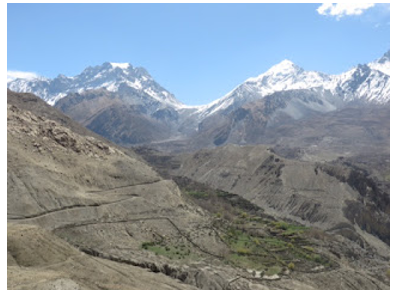
The next section, on the way to Lupra Valley, was my favorite section of the entire trek. Why? I have a lot of reasons. Here's a couple; We would be on a single track for the rest of the day. We would climb to the highest elevation on our trek, which is also the highest elevation I have ever been to. We would be completely isolated and amongst the mountains. Finally, we would have a continuous 360 degree view of nothing but mountains and vast emptiness.
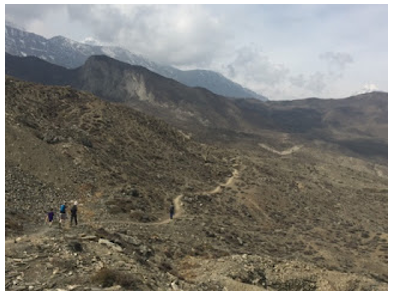
We left the village and set out on the single track. After about 15 minutes we were in the Himalayas and we were completely alone. No buildings, no cars, no people. We soon came across a very fertile section of land.
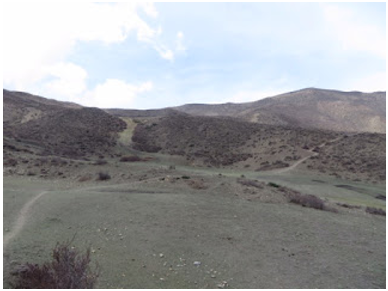
I'm not sure what to call it, perhaps it was a basin. The distinct green color (above pic) stood out amongst the barren landscape. There were animals grazing high on the hillside to our left. If I were a goat, this is where I would spend my day. The path weaved in and out through the basin and then started to ascend. You could see the path snake up and up into mountains. You could just make out the point at which the trail peaked; our immediate destination. The sun was hot, the air was thin. The trek was about to get difficult. Over the next two hours we would gain a lot of altitude. Eventually we made it to that peak and that's where I felt "it." What did I feel? It's hard to explain. I will try. I felt euphoria. I have only felt this way a few times in my life. I can only be felt with the right combination of heightened awareness, intense beauty and the satisfaction of achievement. We had hit the high point of our trek. Literally and figuratively.
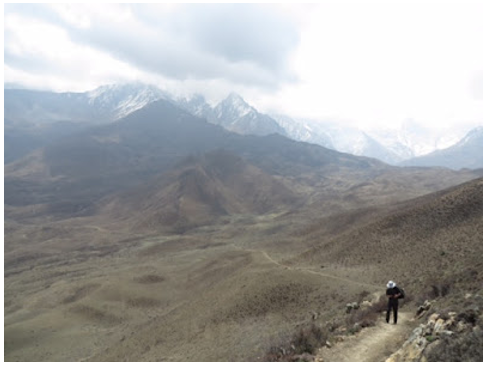
Our guide said we were over 4,300 meters (14,107 FT). We sat down for a drink of water and a rest. The scenery was also hard to describe. The words magical, inspiring, reverent, and astonishing all come to mind, but none offer proper justice. I felt like I was on top of the world. I guess I wasn't that far off? Looking back from where we came (above photo) you could see the trail we just hiked fall out of sight and out of view until it blended in with the landscape and became one.
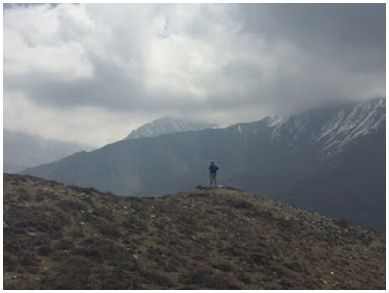
I was exhausted from the climb, but I felt invigorated. My heart was racing from the lack of oxygen, but I felt completely and utterly calm. There are moments in your life that stand out in memory. There are moments in your life that are hard to forget. This was one of those moments. A happy moment. A moment I don't want to ever forget.
The trail flattened out for about a mile. There were a couple of modest peaks to the left and right of the single track. The remainder of the trek would be down, down, down. Our group started to descend, but I wasn't ready for that yet. My buddy and I decided we would hike up to one of these peaks. We headed left and trekked up the rocky hillside. It took us about 20 minutes to the peak.
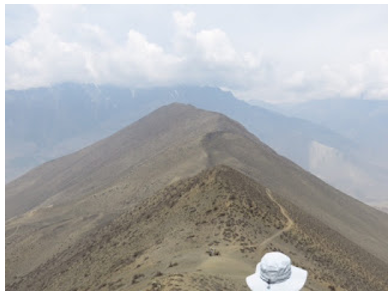
I don't know how high we were but I would estimate we hit around 4420 meters (14,500 FT). This spot would mark the highest altitude I have ever been in my life. I found a small stone on the ground and put it in my pocket. I little memento of the accomplishment. A little piece of the Himalayas.
We trekked down and started our long journey down to the Lupra Valley. Like many trails with a steep decline, the trail switched back and forth for what seems like hours. The path was covered in loose rocks. You had to really focus on each step. It is not hard to turn an ankle here. After spending the whole day going up, the way down was grueling, exhausting and dangerous. It took us another 2 hours to get to the valley. There waiting for us was the dry riverbed of the Kali Gandaki River.
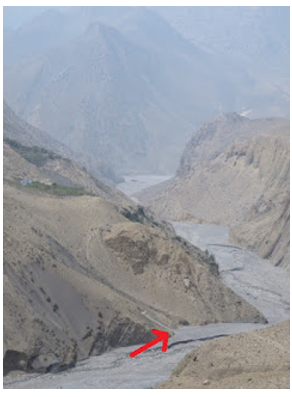
We could see a suspension bridge in the distance (above pic). This is probably the 10th suspension bridge we crossed on our trek. They are everywhere in the Lower Mustang. On the other side, hidden behind giant cliffs and rocks, was the village of Lupra. There, we would get lunch and rest.
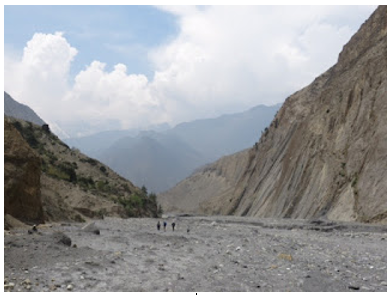
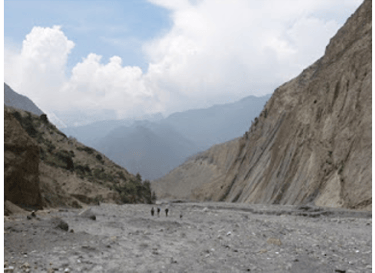
To get to the village we actually had to trek about 1/2 mile on the dry riverbed. What? Yes, a dry riverbed. On the other side of the river was a shear rock wall that must have scaled thousands of feet up. Our guide told us people rock climb that wall. Seeing it up close, it was hard to believe. I kept wondering what this place would look like when the river was flowing. It was hard to imagine. Walking on the dry river bed was strange. It felt wrong, but this is Nepal. Odd and strange are the normal here. I felt like I was constantly trying to reconcile reality. Unfortunately, that just led to more confusion. After a while you realize that you just have to give into the strange, accept the unexpected, embrace the unusual. and appreciate the extraordinary. Nepal is a truly special place.
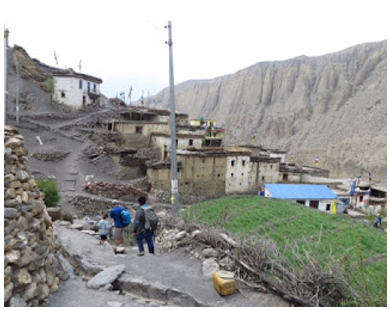
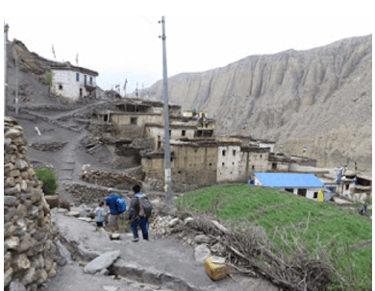
We made it to Lupra. We were starving. While waiting for our lunch we met a group that was on the Annapurna Circuit Trail. I asked about the Pass. The two women who were probably in their mid-forties talked about how hard it was. Because of the snow and the steepness, it took them 3 hours to descend once they were over the pass. They said it was incredible. I don't doubt it. We were running late so our guide pulled some strings with the owner of the restaurant. They took us in the back where the kitchen was. There was a long table set up and we were seated. We watched them cook the rice and noodle dishes while we talked about the next stage of our trek.
We would take a Jeep to Marpha. After seeing and hearing about some of the road conditions, my buddy asked our guide if the road was bumpy. His response was, "No, it’s not too bad." We ate some noodles for lunch and headed out. The jeep picked us up on the dry riverbed about a 5 minutes’ walk from where we ate lunch. I looked out at the "road" we were about to embark on. A sick feeling developed in my stomach. It didn't look like a road, which is probably because it wasn't a road. It was a river. The next 45 minutes were not fun. I honestly don't know how cars were allowed to drive on this river. The riverbed (aka- the road) was made up of small, medium and large rocks. I felt every one of them. My buddy looked at our guide in amusement "I don't want to know what your definition of bumpy is." He didn't get the joke. He seriously didn't consider this to be a tough or challenging ride. It was hard to comprehend that. I couldn't begin to imagine what his definition of a bad ride was. I didn’t even want to imagine it. Anyway, back to reality. So, here we were, going five miles an hour on a riverbed through rocks and streams in the middle of nowhere in Nepal. I guess I shouldn't have been surprised. Every day I experienced something new. Something I never thought I would experience in my lifetime. It was an incredible place. We exited the river and drove on a jeep path for about 15 minutes before we headed back into the river.
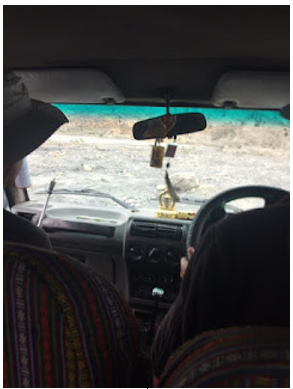
This time we had to cross some the water in some pretty precarious spots (above pic). One time in particular we crossed the river and submerged the Jeep up to the hood! This water was moving. I wouldn't call it rapids, but it wasn't far off! There was another jeep on the river that was essentially stuck. They didn't know where to go. Our driver didn't have that problem. We passed the jeep and went right through the river. We were all looking at each other in awe. Just another day in Nepal.
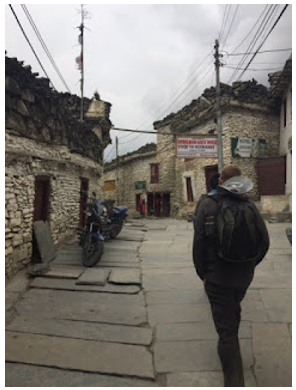
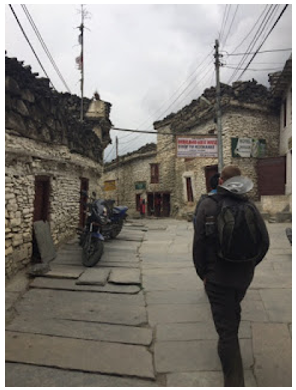
20 Minutes (and 6 engine stalls) later we arrived on the outskirts of Marpha and walked to our hotel. Marpha was bigger than most of the other villages we had seen. It was also very green. They were famous for their apples. You could see apple trees everywhere. The village was clean. It was the cleanest village we had seen in this region to this point. It actually looked like this village was prospering here. We walked to our hotel; Hotel Marpha Palace.
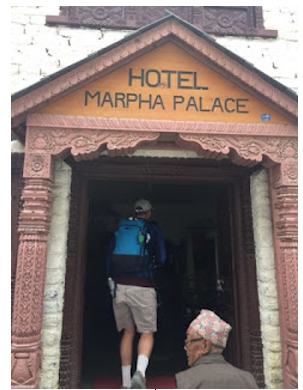
The hotel was large and clean. Our rooms were fine. We had our bathroom and we had our own shower. While it was probably one of the best places we stayed at, I thought it lacked character. It was sort of bland and boring. I did take a hot shower though, the first since Kagbeni. We walked around the village and climbed up a huge staircase to check out a Buddhist temple.
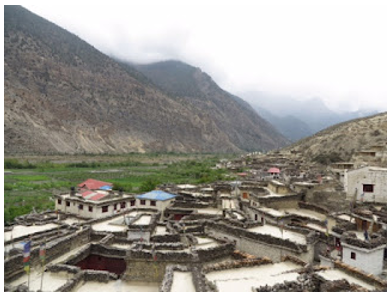
From the top of the stairs, you could see the whole village. You could also see where all the residents lived. Their homes were all connected in a strange grid-like pattern of rocky one story buildings. From above it looked like a giant maze. Connecting the buildings were unique ladders that allowed people to walk from roof to ladder. Ladder to roof. It was very interesting.
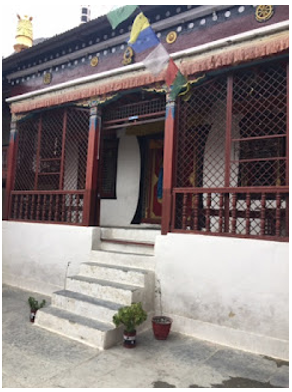
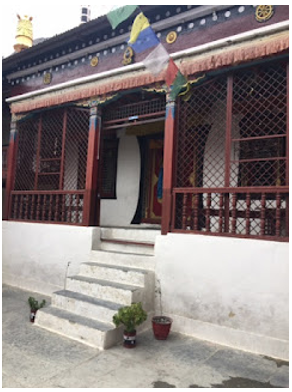
The temple was inhabited with many young Buddhist monks. They were probably in the 8-12 year old range. They seemed to be very happy. We walked around the village for a little while longer and then went to dinner. For dinner I had dal bhat, which is a traditional meal in Nepal. It is the staple food of the area. It consists of two key ingredients; steamed white rice and lentils. The rest of the dish can vary from place to place, but it usually consists of seasonal vegetables, curried meat and some type of pickle. It looked like this:
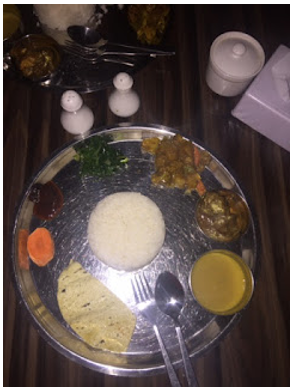
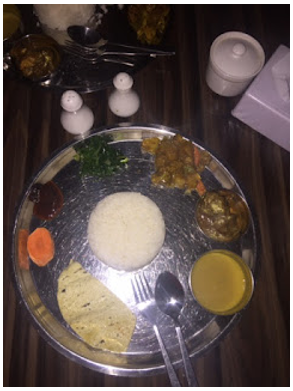
I really like the fact that the ingredients were all separated so I could mix and match as I pleased. Overall the meal was good, but the experience was better than the food. After dinner I couldn't wait to go to bed, so that's what I did. I was out cold in 5 minutes.
Day 4: Marpha to Thasang Village
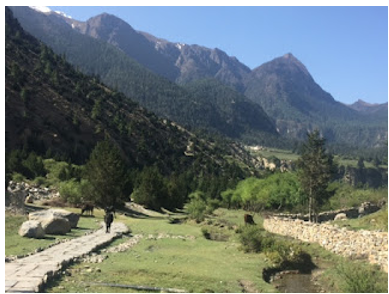
Our plan for the day was to trek to the village of Tukuche and catch a jeep ride to Thasang Village. Thasang Village is the wildcard of the trip. It was highly recommended by the Himalayan Trails people. We asked our guide about it. His eyes lit up, "It's beautiful there." I was excited. The trek to Tukuche was about 2-3 hours. There was a road that ran along the river that led directly there, but our trek would be on the other side of the river. Once we were across the river, we trekked on a what looked like a quiet walking path. It meandered through green fields and past people’s homes.
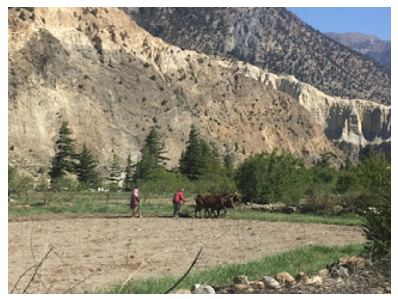
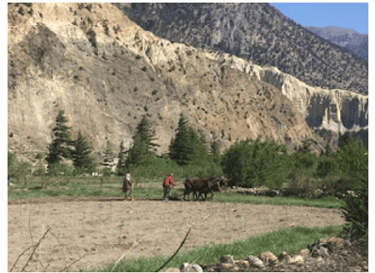
We walked through a couple of farms and witnessed the locals tilling their field with oxen. It was like taking a step back in time. Farming equipment was available here. Tilling equipment was available here. It didn't matter. The local farmers preferred to do it the old-fashioned way. The husband would lead the cattle. The wife would follow behind dropping seeds into the newly tilled soil. It was humbling to watch.
It was very green here. The trek was mostly flat, but what it lacked in elevation it made up for in pure beauty. It was a very pretty place. We passed a small school house and headed into a wooded area. Today's trek was very different from previous days. It was relaxing. Massive mountains dominated the landscape. In front of us. Behind us. On both sides of us. I never got tired of looking at them.
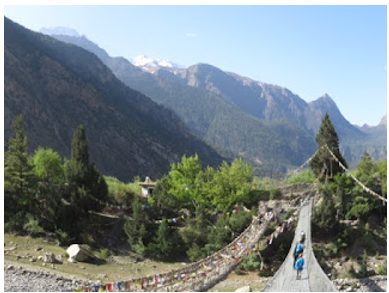
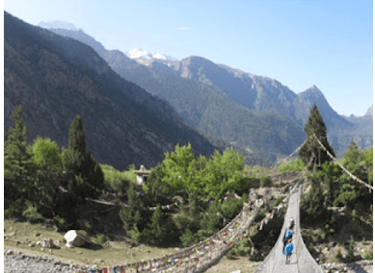
We trekked on and before I knew it, we reached another suspension bridge. We crossed the bridge back to the road. Our guide said it was 10 minutes further to Tukuche. We arrived around 11AM. We went to a Dutch bakery. It was a famous place in Tukuche mainly because it was owned by a Dutch man that had married a Napali women and lived here for 20 years. The bakery (High Plains Inn) was known for their coffee and apple pie. We had both. The coffee was the best of the trip.
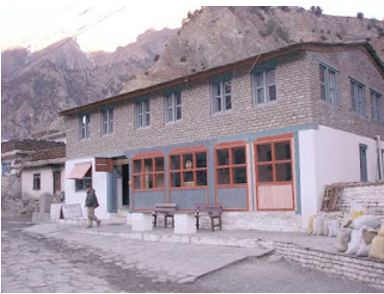
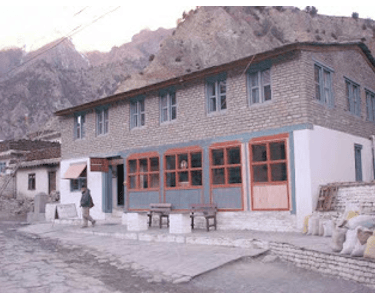
There was a sign on the window that claimed if you beat the owner (Dutch guy) in arm wrestling you would receive free room and board. Apparently, he was a workout freak. I was a little surprised to see the sign until I saw our host. No one was going to beat him, that's for sure. The plan was to eat lunch here and then get a jeep ride from Tukuche to Thasang Village, so that's what we did.
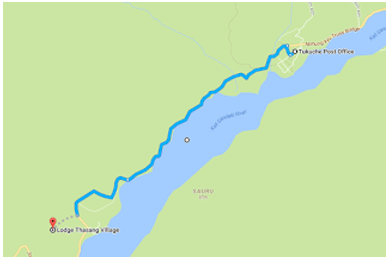
The same dusty and rocky road that ran along the river from Marpha to Tukuche ran along the river to Thasang Village. The drive was harrowing. I can’t remember being as scared as I was on this drive. The road would sometimes rise hundreds of feet above river. It was narrow. There was no guard rail. We were on the left side of the road; the riverside. I was on the left side of the jeep, the death side. I remember looking out my window and then looking down four hundred feet below to where the dry riverbed was. There was not much room between our jeep and a fatal fall. I felt sick. What if a tire blew? What if we slid just a little too much to the left? There were too many "what if's”, and they were dominating my thoughts. I couldn't wait for it to be over. The distance was roughly 5 KM, but the ride took 45 minutes. It seemed like it took 2 hours. The last stretch of the drive brought us up a steep switchback road to Thasang Village. Up and up we went. Switchback after switchback. I don't know how expensive this jeep ride was, but I don't think it was worth it for the driver.
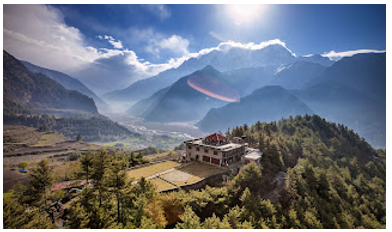
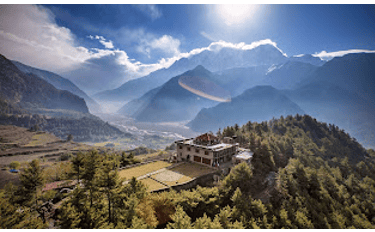
The Thasang Village and our lodge was perched high up on a plateau. It had a 360 view of the surrounding country side. The lodge was stunning. It was easily the nicest place we stayed at anywhere in Nepal. We checked into the lodge and relaxed for a bit.
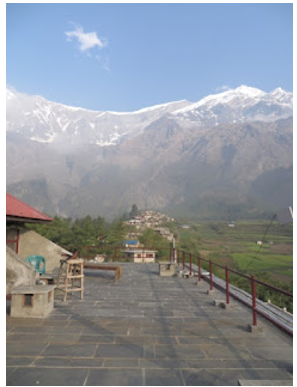
The roof of the lodge had chairs set up and provided an incredible view. The history of the lodge was interesting. Our host, the owner of the lodge, was a Japanese man. He had come here many years ago and purchased all the land in this village.
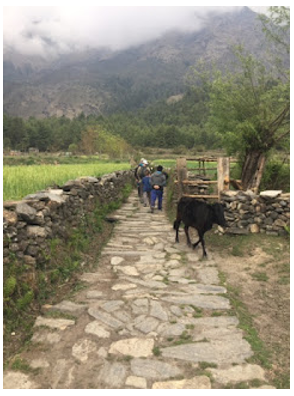
After we were settled, our host took us for a tour of the property. Behind the lodge was a small quaint path that led through the tiny village.
Large plots of green farmland spread out from the village and filled the valley. That's where the villagers were, farming in the late afternoon sun. It was a hard life, but it was peaceful here. If I was going to toil in the fields every day, this is the place I would want to be. There were a lot of animals hanging out in the village. We had to step aside on the path to allow 3 cows to pass by. They were out on a stroll too, probably enjoying the scenery just as much as we were.
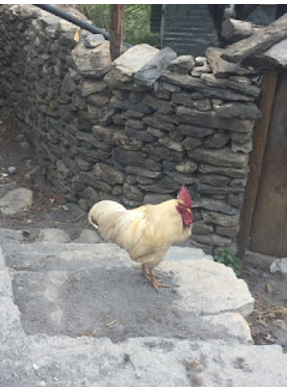
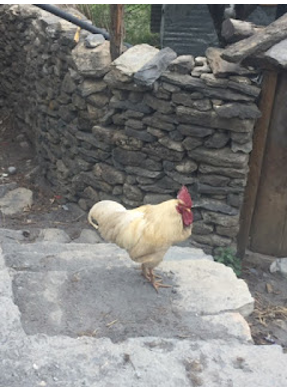
I saw a rooster hanging out on the steps of someone's home. Just looking around, not a care in the world. It didn't take long to walk through the whole village, maybe 5 minutes. We exited the village and into a lush, wooded area and then into a clearing. At the end of the clearing there was a giant cliff. From that vantage point, you could see for miles and miles. In the distance you could see mountains stretching into the sky and the Kali Gandaki River snake its way through the valley.
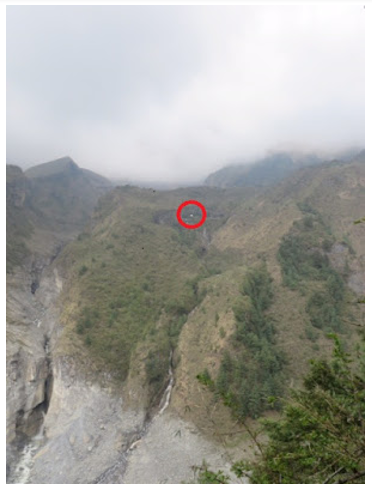
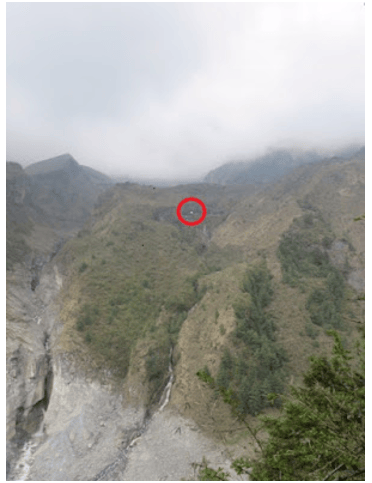
Up in the mountains you could make out waterfalls cutting through the cliffs and feeding the river below. While we were standing there, taking in the view, we noticed what looked like a small building high up in the cliff side (above pic). It looked like the "building" was nestled right below the flowing water of the falls. If you looked real closely you could make out a faint trail switching back and forth up the steep cliffside. My first thought was "We need to hike that right now!" but I was getting ahead of myself. First, I asked our host what that building was up on that ridge. He then told us a story of monk that decided he would live in a cave up under the waterfall high up on the mountain. He lived in this cave for 3 years. He also built a small Buddhist temple for prayer. At first, I thought our host was messing with us. It sounded like something out of a storybook. He wasn't. My need to hike up to this cave and monastery suddenly became too much too handle. I asked him how long to hike it, and he replied with "about an hour." It looked steep. It looked grueling. It looked amazing. He then took us to another side of the property. To get there we had to trek up a steep hill for about 20 minutes.
The hill was littered with hundreds of strange trees. They looked like something out of a Dr. Seuss book. In these hills we saw our first yaks. Also, very Seuss like. I believe it was the first time I'd ever seen these furry animals. I may have seen one in a zoo, but never in its natural state high up in the hills.
We peaked the hill and were treated with more views. We were on a ridge high above the village. We looked to our right. Spread before us was the village, the lodge and the river behind it. (above photo) On the other side of the ridge was more mountains and more waterfalls. We spotted another building way up in the mountain. This one was a 2-3 hour trek. Someone lived up there! The hiking possibilities seemed endless. You could see mountains way off in the distance as far as the eye could see. We asked our guide about a few of them. Can you hike up that one? How about that one? Yes, was the answer to all the questions. Everything was hikeable. Some, he said, took a month to trek too. Others took weeks. It was never ending. You could stay here for years and never make a dent.
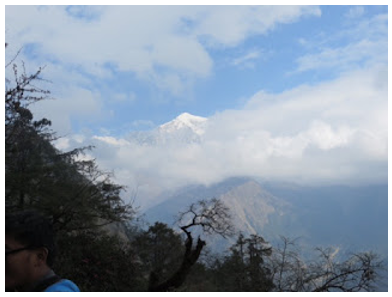
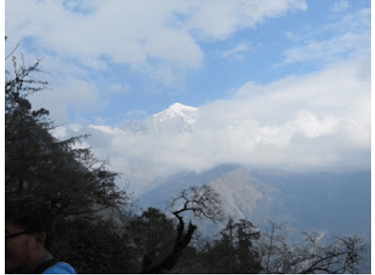
We took a few minutes to rest and take in the views and that's when it happened. I remember looking back towards the Lodge. Then looking up. I saw mountains. These mountains were huge. They held my gaze. They captured my imagination. But that wasn't the memorable part. I was about to come back to reality when something caught my eye. Resting on top of the mountains was a layer of clouds. It made sense. These mountains stretched high up into the sky. It seemed reasonable that clouds would envelop the top of them. But it wasn't the clouds that caught my eye either. I looked higher. More clouds. I looked even higher still. There it was, exploding out of the top of the clouds, the 7th highest mountain in the world, Dhaulagiri. (above pic) The sight of it shocked me because I didn't realize it was there. I remember seeing it for the first time above those clouds and wondering if it was an illusion. It looked unnatural, like it didn't belong that high up in the sky. One of only fourteen 8,000 meter mountains in the world, Dhaulagiri topped out at 8,167 meters (26,795 FT). Dhaulagiri means dazzling, white, beautiful. I couldn't come up with a better description if I tried and I could only see the very top of it! I remember pointing it out to the rest of group. I remember the looks on their faces when they realized what they were looking at. It wasn't your everyday average mountain. This one had an attitude. This one was shouting at us from 27,000 FT "Look at me." Pictures don't do it justice. The lighting wasn't right. There was too much cloud cover. But being there you felt its presence. It loomed over the landscape with air of superiority. It's not something you can capture on film. I tried. Here is another photo of Dhauligiri:
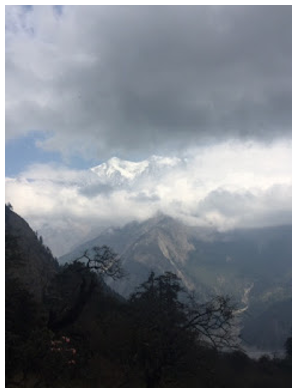
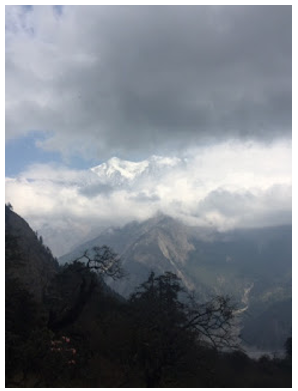
Plain and simple, this place was both intriguing and humbling. Everywhere you look you were rewarded. It was sensory overload. We rested for a while longer, but my thoughts kept reverting back to the waterfall, the cave and the temple. There was a level of excitement about the idea of seeing that trio that was hard to escape. It was like it was out of a movie. I mean it’s a cave up on the side of a mountain under a waterfall! It didn't sound real. I needed to find out. I needed to see it for myself. I couldn't squander this opportunity to see it firsthand. I couldn't contain my excitement. I started to get anxious. I started to feel out my group and see if anyone was up for the late afternoon trek. They were. Of course they were. YES!!! It was about 4PM and dinner was at 7PM, so we headed out. To get to the start of the hike we had to trek down to the base of the mountain where the waterfall ended and the river began. Then we went up. And up. And up. And then way up. The sun was shimmering. The air was delicate. I started to sweat. I couldn't breathe. The switchback trek up to this cave was essentially a giant staircase. Rock slabs had been used to make stairs on the mountain side. I'm not sure how, but I was too tired to ponder the question. So, I ignored it. Up and up we went. Stair after stair. Switchback after switchback.
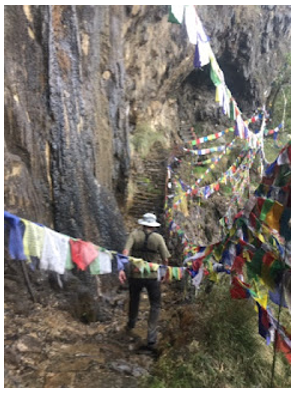
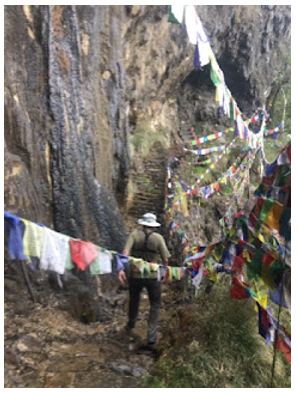
We did this for 45 minutes. Looking back on it, I'm surprised how quickly we climbed this. An endless staircase in the sun at such a high altitude was nothing to take lightly. I think the excitement of hiking up to something so intriguing and so different helped push us up that mountain. Adrenaline is real. The trail followed the falls up and after about 40 minutes we came to strange building.
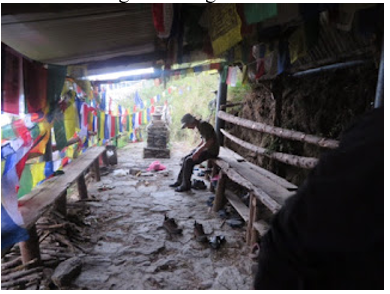
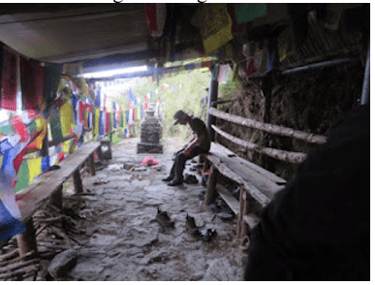
The building was open on each side (above pic). It had a roof. It was like a big rectangle. On both sides of the building were benches. Under the benches were about 50 pairs of sandals of various shapes and sizes. Why? The simple answer was that shoes are not allowed in temples. How the sandals got there and the story behind it... well, I wish I knew. The strangeness and uncertainty of how it came to be only added to the intrigue. We took our shoes off, found sandals that fit (sort of) and kept on. Next, we came to the water fall. We literally had to pass beneath the water as it fell. It didn't fall heavy as you may think. It was more of a cross between a trickle and flow. Ignoring our wet feet, we continued onward.
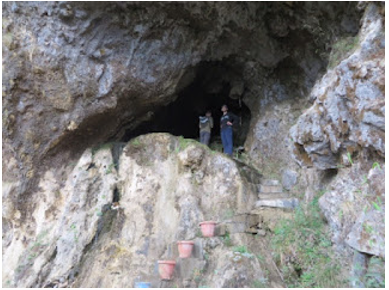
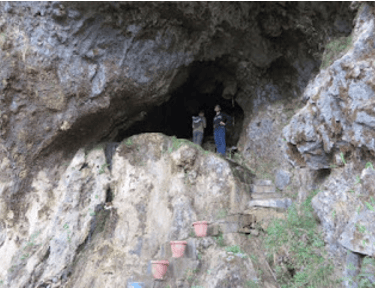
After a minute or two we spotted the cave. It sat up on the mountain to the left. It was dark. It was ominous. It was also oddly inviting. A small staircase led up to the cave. Potted plants lined the stairs offering a welcome.
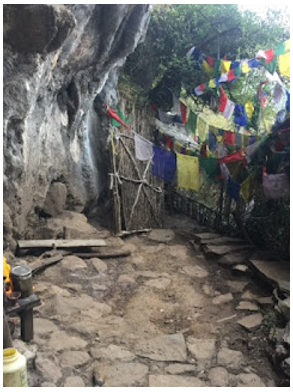
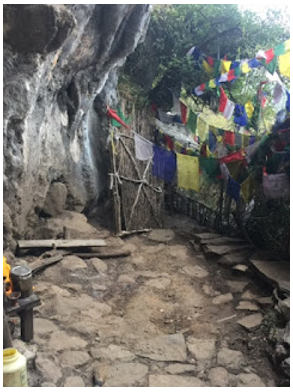
To the right of the cave was a small temple. It was literally on a cliff. Inside was relatively empty. It was clean. There were prayer candles and small statues of the Buddha situated throughout. We decided to climb up into the cave. To say it was dark and mysterious was an understatement. To think that someone lived here for years is really hard to grasp. After entering 5 feet I had seen enough. It was pitch black. The cave looked huge. It could have been ten feet deep. It could have been a hundred feet deep. I didn't venture into the darkness, so I'll never know.
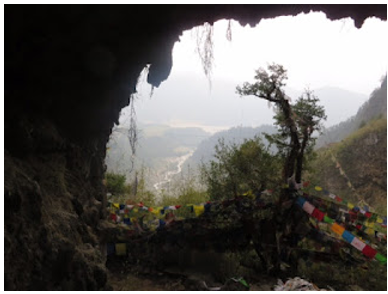
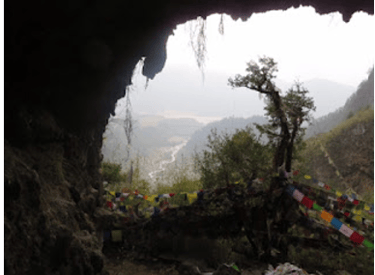
The view from the cave was inspirational. Once again, you could see Dhaulagiri's peak high above the clouds. Despite our altitude gain, it certainly didn't look any smaller. In the distance you could see the river snake its way through and into the horizon. Yes, this was a special place indeed. The story about the temple, the cave and the waterfall made it mystical. The effort to climb to it made it satisfying. The views you saw from the top enriched the experience. It would mark our last real trek on the trip and I couldn't think of a better way to end it. It only took us 20 minutes to get down the giant staircase to the riverbed and another 20 minutes to hike back to the lodge.
When we arrived, the sun was setting and we were starving. We were in for a treat. As I mentioned before, the owner of the lodge was Japanese. For dinner we would be served a 6 course Japanese meal all while sitting at a Kotatsu table. What is that you ask? Well, that's the treat. The table itself is not that special, but how you sat at the table was. There was a large heavy blanket that encircled the table allowing for the person sitting to place their legs under the table and cover themselves with the blanket. Confused, I looked around and tried to copy what others were doing. Once I had my legs situated perfectly with the blanket covering me properly, I was greeted with the wonderful feeling of warmth. Under the table was an irori, which is essentially a cooking hearth fueled by charcoal. The coals were burning red and the heat spread out to all that were seated. The blanket kept the heat in, and the result was a luxury I had never experienced. The chef then started the first of what seemed like 10 courses of food. Roasted peanuts, pickled vegetables. chicken tempura, and teriyaki beef were the most notable. It wasn't my favorite meal of the trip, but it was my favorite eating experience.
We were exhausted. When I went up to my room there was a large thermos of tea waiting for me at my door. Another nice touch. Before I got a chance to drink it, I fell asleep.
Day 5: Helicopter to Pokhara
Because we only had 4 full days of hiking and because we wanted to see a wide variety of places, we needed to be creative to save time. Cue the helicopter. The time it would take to get back to Jomson, jump on a plane to Pokhara and then jump on another plane to get back to Kathmandu was just too daunting, so we cut some corners.
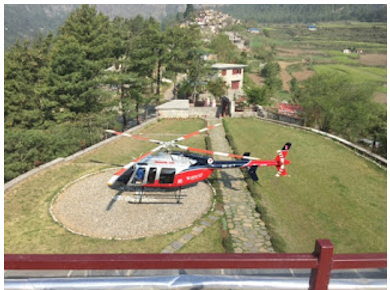
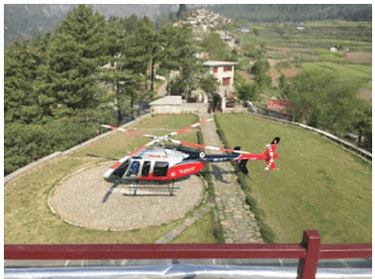
The helicopter picked us up in the front yard of the Lodge. What? That's not normal? Oh... well it is here. There's actually a landing pad right outside the front door of the lodge (above pic). We boarded the helicopter and set off.
As you can imagine, the views from the helicopter were amazing. I tried to take a lot of pictures, but the camera was ill equipped to capture what my eyes were seeing. Mountains, valleys, hills, rivers. Dark vibrant greens and dull depressing browns. All the colors were represented. Most surprising to me was seeing where some homes were located. We flew over some really remote areas and here and there you would see a house on the edge of cliff or in a place that you couldn't possibly imagine a house being. I was baffled, amused and impressed at the same time. The 45-minute helicopter ride went by so quick I barely had a chance to register the experience. I know this; It was a nice end to the trekking portion of our trip. I was content. I felt like we experienced a little bit of everything. We trekked every imaginable terrain and landscape. We flew over the largest gorge in the world. We hiked to an altitude of over 14,000 feet. We saw the world’s 7th highest mountain. We saw the largest mountain pass in the world. We experienced multiple villages. Some poor. Some prospering. We visited one of the most famous Buddhist/Hindu temples in the world. We took off road (on river) jeep rides. We flew on small planes and landed in small places. And we capped it off with a helicopter ride through the remote countryside of Nepal. Wow.
We landed in Pokhara. While exiting the helicopter, it donned on me that it was pretty much over. The trip, the trekking, the Himalayas, the villages and the whole experience of being immersed in this strange and enticing world. We still had a half day back in Kathmandu before flying home, but it felt like it was over. Coming to terms with the finality of the trip was hard. I was deflated. I was tired. I was sad. We waited in the Pokhara Airport for 7 hours after our flight was delayed, delayed again and then delayed again. Finally, they allowed us to pass through the "security check" which was a small smelly room that led to the "gate" waiting area. The security guard calls you into a small closet sized room, shuts the curtains and then pats you down and then yells "next." It’s silly, demeaning and antiquated. It certainly isn't stopping anyone from bringing "illegal" stuff on the plane. Oh well. I just wanted to board the plane. That took another hour. The flight to Kathmandu was uneventful. We arrived, dealt with the chaos of the baggage claim and then drove back to my friend’s house.
Epilogue- One Last Day in Katmandu
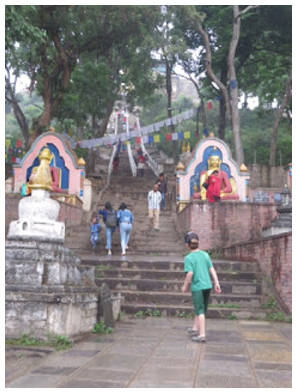
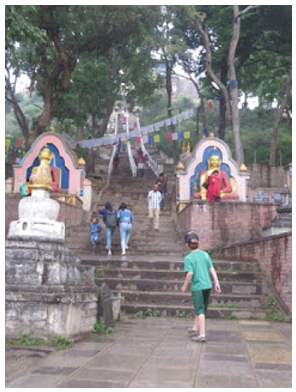
For our final half day in Nepal, we decided to spend a few hours in Kathmandu checking out some of the most popular temples and stupas. There's a lot of sights to chose from, but again, we didn't have a lot of time. One highlight for us was the Swayambhunath Temple AKA Monkey Temple:
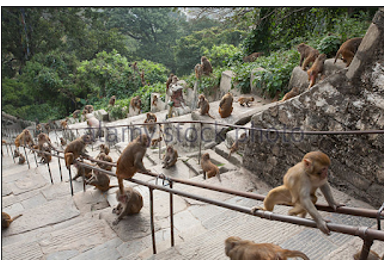
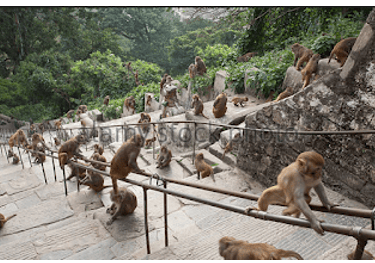
The temple is a holy Buddhist shrine. I won’t go into too much detail about the temple itself, but suffice to say there are a lot of stairs and a lot of monkeys. There's also quite a lot of interesting history as well. The monkeys that live here are said to be holy. While that may be true, these holy monkeys scared the holy hell out of me. I came across a few pieces of advice while researching our trip. One in particular stuck with me; Don't look the monkeys in the eyes. I definitely followed that rule, but people are attacked by these animals, so I didn't exactly feel safe. I heard many a horror story of people having to walk through a horde of these monkeys to get where they are going. Luckily, I didn't have to. I think I'd rather climb Everest than face 100 of these creatures! Perhaps my favorite place we visited was the Boudhanath Stupa:
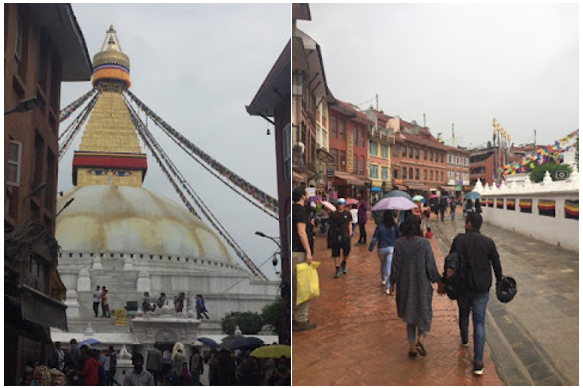
This Stupa had a nice electric vibe. There were shops and cafe's encircling the Stupa. Most of the cafe's had 2nd and 3rd floor porches and balconies overlooking the scene. We didn't spend a lot of time here, but it seemed like it was the type of place you could spend the whole day. You could also freely walk around the various levels of the Stupa, which was situated in the middle.
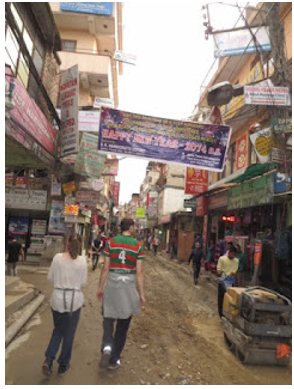
Our final stop in Kathmandu was Thamel. This was the "touristy" shopping area of Kathmandu. I actually came here on the first day of our trip. I liked it so much, I wanted to see it one more time and do some shopping. You can describe Thamel with two words: sensory overload. Long narrow maze-like dirt roads zigzag their way through this section of the city. It had character. The smells were confusing. The sounds were unfamiliar. The sights were unusual. It was a great place to people watch. It was also a good place to get lost. Every 5 feet was another little shop selling the same types of things; singing bowls, Buddhist knick knacks and various types of art. The art was my favorite. In the small amount of distance that I covered in Thamel, I probably saw about 5 shops selling artwork. I ventured into a couple of them. The art was colorful. It was mostly mountain Himalayan scenes. It captured my eye and I know less than nothing about art. The price of the art was based on the artist, but the prices were so low I almost felt bad. I thought about the poor artist spending day after day painting these scenes and selling them for nothing. It was kind of sad. The shops had thousands of scenes to choose from. I purchased a couple that I really liked. I could have easily spent 3-4 hours just walking around Thamel just taking in the scenery, but I was out of time. It was the end of my trip.
While it was nice to see Kathmandu one more time, I was still lamenting about the end of our trek. I missed being out in the mountains. I miss the anticipation of seeing something new and exciting everyday. I miss the excitement of seeing something I had never seen before. I miss Dhauligiri. I miss Nilgiri. I miss the villages. I miss the high altitudes and the exhaustion I felt after a long day of trekking. I miss it all.
Nepal is an amazing place. We were able to cram a lot in a short period of time. I wish we had more time. I wish we could have trekked more. I wish a lot of things, but I don't regret any of it. I'm happy for the time I spent out in the wild Himalayan expanse of the Lower Mustang Region of Nepal.
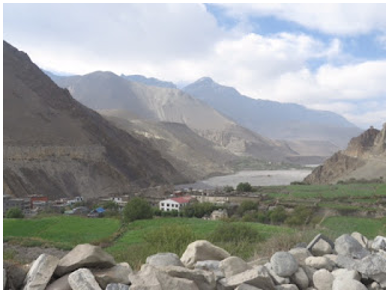
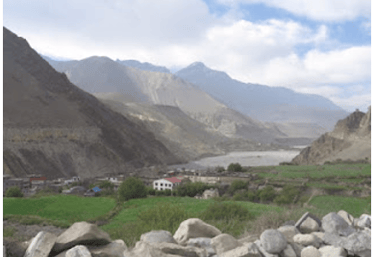
What a wonderful and inspiring place. Will I go back? I doubt it. It's not because I don't want to. I would love to see more of the Himalayas. It's just that it's a challenging place to travel to. The flights. The time change. The chaos. While I loved all of it, there are so many other places to see. So many other adventures to have. For now, I am eternally grateful for the opportunity to experience the odd, the inspiring, the humbling and the beautiful country of Nepal.
-MikeHikesTheAlps, May 2017
Contact
Questions or stories? Reach out anytime.
mikehikesthedolomites@gmail.com
© 2025. All rights reserved.
-MikeHikesTheAlps